
What DStv Installation Costs in Benoni — and What Changes the Number
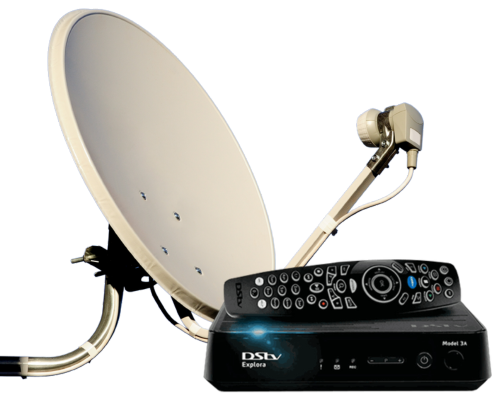
"What does it cost?" is the first question on almost every call, and the honest answer is that it depends on about five things, most of which are visible from your driveway. This page sets out what those five things are, so you can work out roughly where your job sits before anyone comes out.
The guide figures used here are the ones on this site: a basic single-decoder installation from R800, an Explora setup from R1,200, an Extra View setup from R1,500, and a fault-finding call-out from R550. Decoders and other equipment are charged separately. Those are starting points for straightforward work in town, not a price list, and the rest of this article is about what moves a job off the starting point.
What "From" Actually Covers
A basic installation means one decoder, one dish, one bracket, and one cable run to one TV. That is also how DStv itself defines a standard installation when a decoder is sold with an installation voucher. Its accredited installation page lists what comes with an HD single view decoder bought that way: "Installation of your DStv HD decoder to one TV point by an accredited installer", plus activation and a basic demonstration.
For an Explora or Ultra bought the same way, DStv lists "Installation of your DStv Explora or Ultra decoder to two TV points by an accredited installer".
And it is equally clear about what is not included: "Your installation excludes costs for work such as connecting the decoder to more than 1 TV or linking it to other decoders."
That single sentence explains most of the gap between what people expect to pay and what the job actually is. A second TV is a second cable run. A second decoder is a linking job. Neither is part of a basic install anywhere.
The Five Things That Change the Number
1. How Far the Cable Has to Travel
Cable is cheap. Getting it from the dish to the TV is not always. A dish on the east-north-east wall and a TV in the lounge on the other side of the house means a run through a roof space, down a cavity, or around the outside with clips every half metre. The length itself matters less than what it has to pass through.
DStv says the same thing in its installation terms: "There may be added costs for additional travel, cabling or amplification required – all, which are for your account. Please confirm requirements with your installer before the installation."
The practical version: tell whoever quotes you where the TV is and where you would like the dish, and get that confirmed before the day.
2. How Many TVs, and Whether They Need to Be Independent
There is a real difference between "the same picture on two screens" and "two people watching different things". The first is a splitter and a second cable. The second is a second decoder linked in Extra View, and that is the R1,500 category rather than the R800 one.
DStv's own XtraView notes are worth reading before you decide: "When linking 3 decoders you can use a combination of the DStv Explora and the DStv HD Decoder. The primary decoder when linking 3 together MUST be a DStv Explora." It also flags a step people forget entirely: "We recommend the use of a DStv Accredited Installer for all XtraView installations. They will assist with the physical linking of your decoders. To ensure correct billing, you will also need to contact us to link the decoders on your account."
That last part is not an installer job at all. The physical linking and the account linking are two separate things, and only one of them happens at your house.
3. Whether the Existing Dish and LNB Can Be Reused
Plenty of Benoni homes already have a dish on the wall from a previous owner. Sometimes it is perfectly usable and the job is just an alignment and a new cable. Sometimes the dish is too small, the LNB is the wrong type for what you are installing, or the bracket has rusted through.
DStv is specific about what the current decoders want: "The recommended installation is the same for all our DStv Explora models. It requires a DStv Smart LNB with an 80cm satellite dish." If what is on your wall is smaller than that, or the LNB is an older single-output type and you are adding a second decoder, that is hardware that has to change.
4. What the Dish Has to Be Mounted On
A face-brick wall at chest height is the cheap case. A tile roof, a steep pitch, a double-storey, or a pole in the garden because the only clear view is away from the house all cost more, because they need different brackets, more time, and more care about waterproofing. Complexes and townhouse schemes add another layer, because the mounting point is often not yours to choose.
5. Whether It Is an Install or a Diagnosis
A call-out to find a fault is priced differently from a planned installation, from R550 on this site, because the work is different: testing, measuring at the dish, and isolating the cause before anything gets replaced. Parts are quoted before they are fitted. The thing to avoid is paying for a diagnosis twice because the first visit replaced the obvious thing without measuring.
Questions Worth Asking Before You Accept Any Quote
These apply to any installer, not just us.
- Does the price include the cable run to where the TV actually is, or to the nearest wall?
- Is the dish new, or are you reusing what is on the wall, and if reusing, has it been checked?
- What size dish and which LNB?
- Is the decoder included in that figure or quoted separately?
- What happens to the price if the cable has to go through the roof?
- What is the guarantee on the workmanship, and what is the guarantee on the parts?
On that last one, DStv sets a clear benchmark for accredited work: "All installations include a 12-month guarantee on equipment and a 3-month guarantee on workmanship." That is a useful yardstick when comparing quotes, because a quote that says nothing about either is quietly cheaper for a reason.
Why Nobody Sensible Quotes a Firm Price on the Phone
An installer who gives you an exact figure before seeing the property is either padding it heavily or about to find reasons to add to it. The five factors above are all site-specific, and three of them cannot be guessed from an address.
What does work is a description plus photographs. A picture of where the TV is, a picture of the wall or roof where the dish would go, and a picture of any existing dish will usually get you within a sensible range without anyone driving anywhere. If it is a fault rather than a new install, the error code on the screen is worth more than a paragraph of description.
You can see what each type of job involves on the DStv services page, and the Extra View setup page covers the second-decoder option in more detail if that is the direction you are heading. To get a figure for your own house, start from the Benoni DStv installation page and send through the details.
Frequently Asked Questions
How much does DStv installation cost in Benoni?
As a guide, this site quotes a basic single-decoder installation from R800, an Explora setup from R1,200, an Extra View setup from R1,500, and fault-finding call-outs from R550, with equipment charged separately. Where a specific job lands depends mainly on the cable run, the number of TVs, whether the existing dish and LNB can be reused, and what the dish has to be mounted on.
Why is a second TV more expensive than I expected?
Because "a second TV" can mean two very different jobs. Mirroring the same picture onto another screen is a cable and a splitter. Letting two people watch different channels needs a second decoder linked in Extra View, which is a different install and carries a monthly Access Fee on your DStv account as well. DStv's own installation terms state that a standard installation "excludes costs for work such as connecting the decoder to more than 1 TV or linking it to other decoders".
Is the decoder included in the installation price?
No. Installation and equipment are separate. Decoders can be bought outright, on contract, or as part of a package deal with an installation voucher, and which route you take changes the total quite a lot. It is worth deciding on the decoder before asking for an installation quote, because the decoder determines the LNB and the dish requirement.
What guarantee should I expect on the work?
DStv's benchmark for accredited installations is a 12-month guarantee on equipment supplied and a 3-month guarantee on workmanship. Ask for both to be stated on the quote. A quote that mentions neither is not cheaper, it is just less specific.
Can you give me a price over the phone?
A range, yes. An exact figure, not honestly. Send a photo of where the TV is, a photo of the wall or roof where the dish would go, and a photo of any existing dish, and the estimate gets a great deal tighter without anyone driving out.
Need Help with Your DStv?
Installations, signal faults and Extra View, sorted across Benoni and the rest of the East Rand. Call or send a message and we will come back to you with a price.